
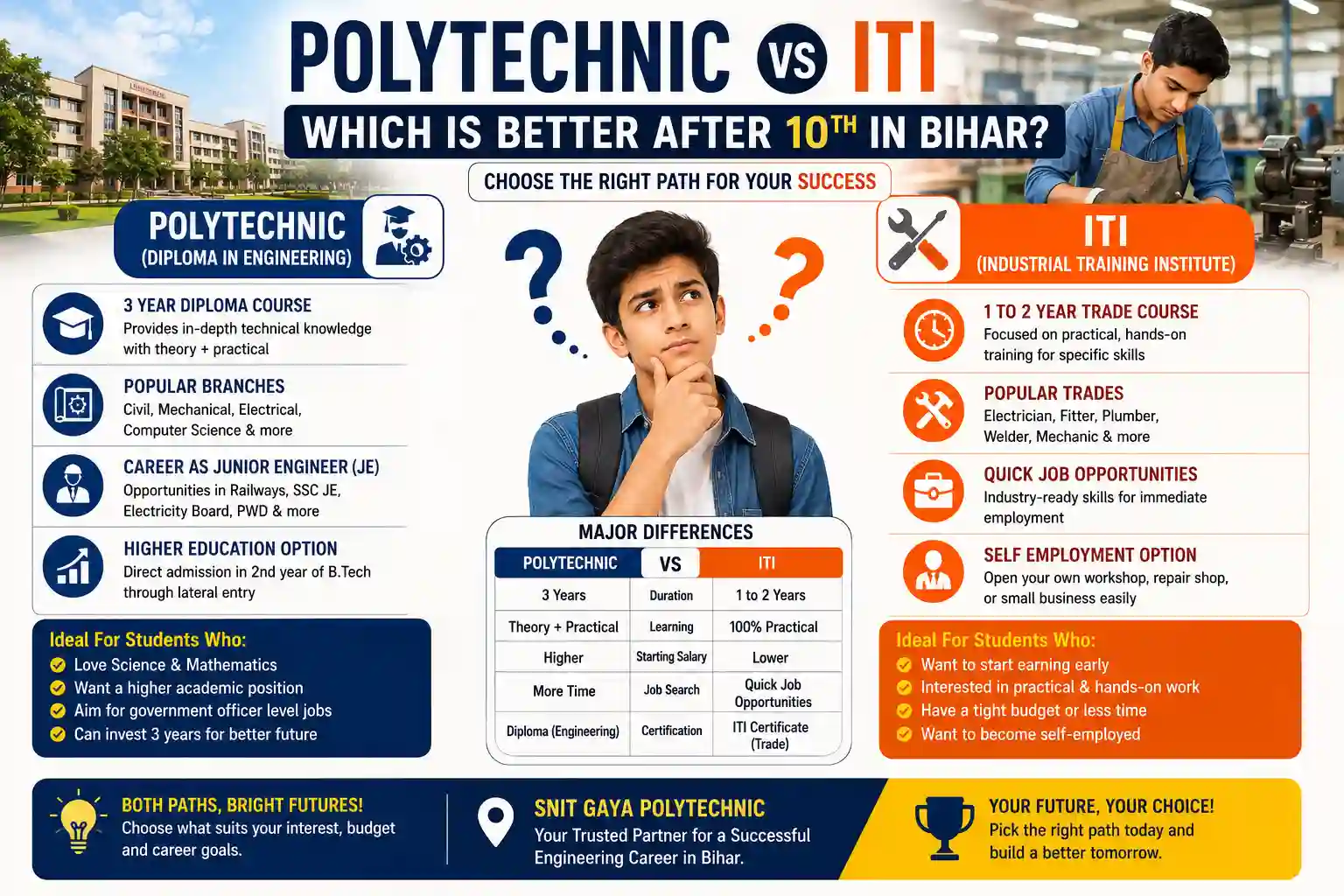
Polytechnic vs ITI: Which is Better After 10th in Bihar?
22 June 2026
Passing the 10th board exam is a huge milestone for every student. Right after the results, a very common and confusing question pops up in every house: polytechnic vs ITI, which path should I choose for a rewarding future? Both are highly popular technical career paths that help you get a job quickly without spending years studying general subjects. While one focuses on deeply engineering concepts, the other teaches you practical, hands-on mechanical skills to start earning money fast.
What is a Polytechnic Course?
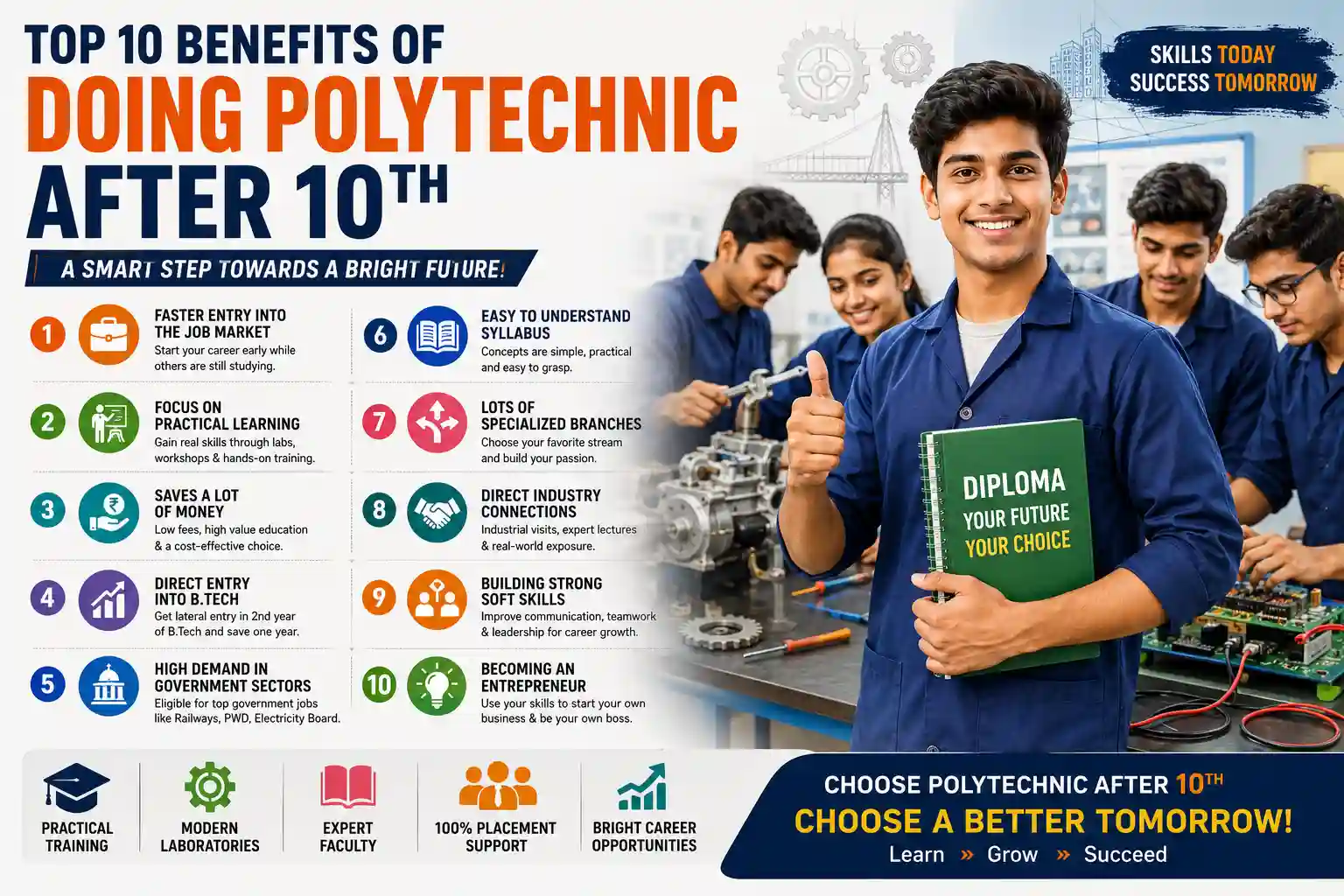
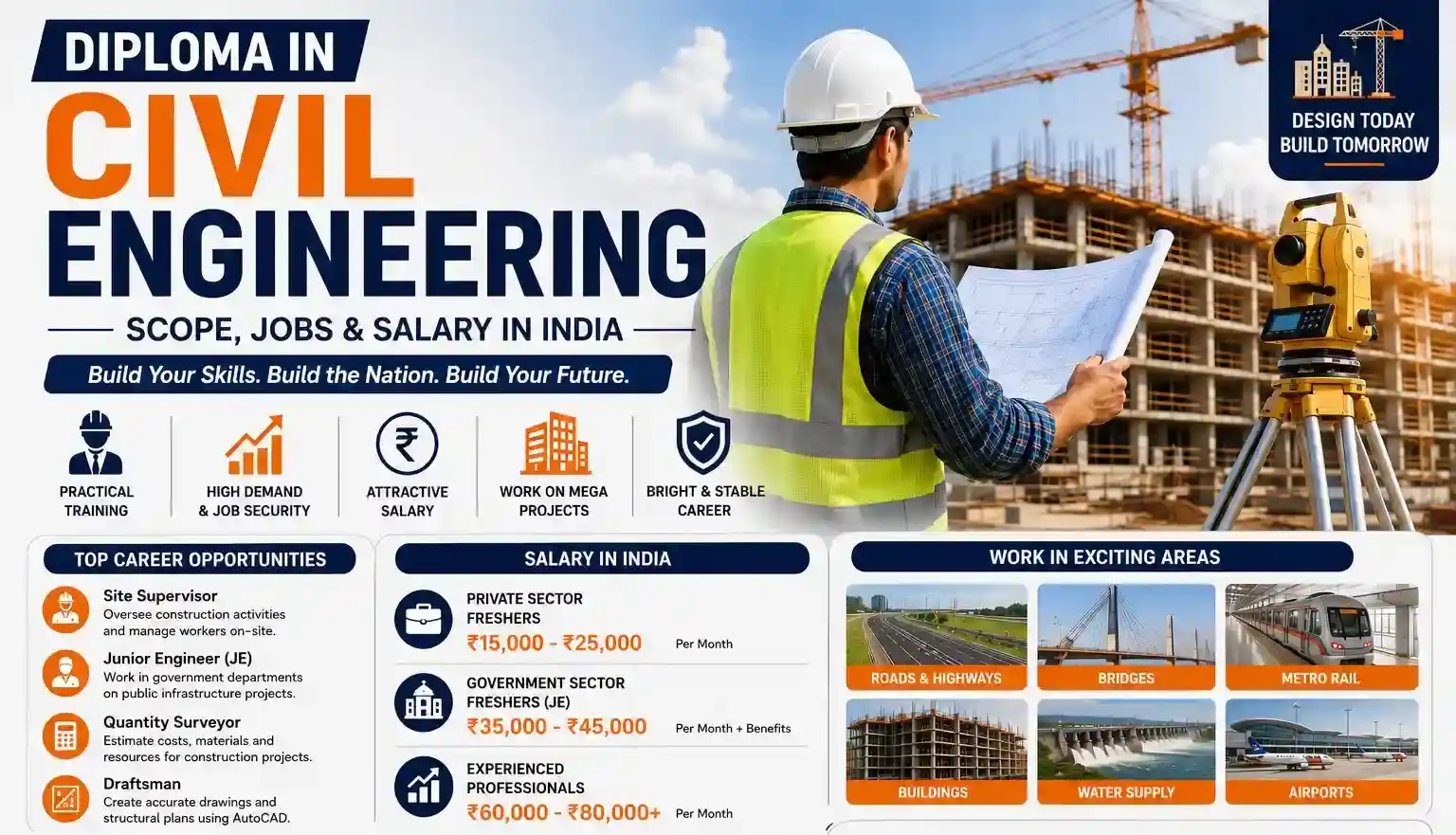
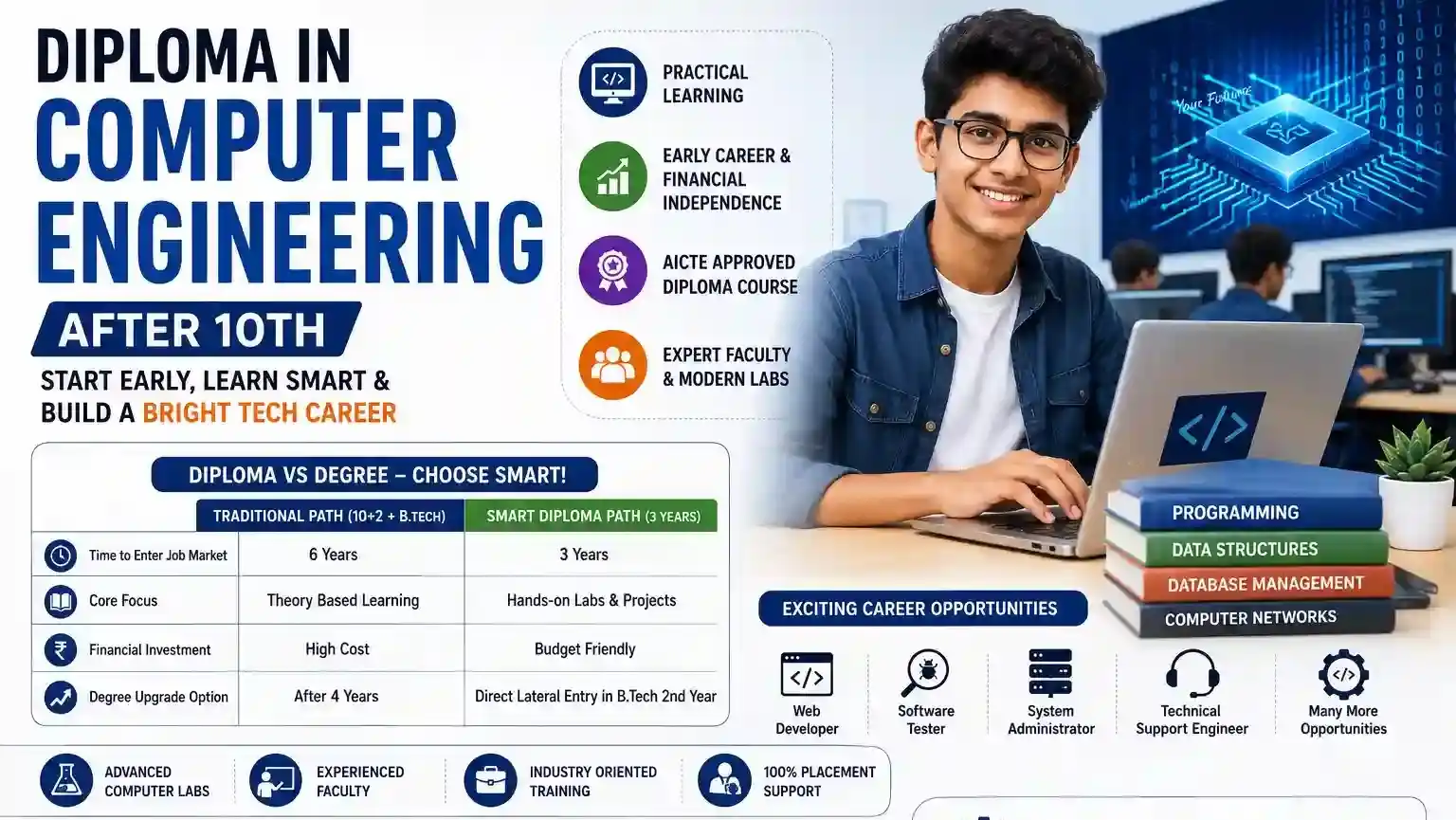
A polytechnic course is a three-year technical program that gives you a Diploma in Engineering. When analyzing polytechnic vs ITI, think of polytechnic as a middle step between school and a full B.Tech degree. It covers popular streams like Civil, Mechanical, Electrical, and Computer Science Engineering. You learn the theory behind machines and also do practicals in labs.
Students who love science and mathematics usually prefer this option. After finishing this three-year course, you are officially called a Junior Engineer (JE). This tag opens the door to massive vacancies in top government departments like the Railways, SSC JE, Electricity Board, and Public Works Department (PWD).
What is an ITI Course?
On the other hand, ITI stands for Industrial Training Institute. It is a shorter vocational trade course that lasts between one and two years. In the polytechnic vs ITI debate, ITI is purely focused on hands-on, manual work. It trains you for specific industrial jobs like electrician, plumber, fitter, mechanic, or welder.
The main goal of ITI is to make you industry-ready in the shortest time possible. If a student wants to support their family financially right away, ITI is an excellent choice. It does not require high scientific knowledge; you just need to learn how to operate tools and fix equipment properly.
Major Differences: Diploma vs ITI
To make the right choice, you must understand the basic differences between a diploma vs ITI program. A diploma or polytechnic course gives you a higher academic position, while an ITI certificate gives you ground-level technical skills. Polytechnic students learn how to manage projects, read blueprints, and supervise teams of workers on a construction site or factory floor.
Alternatively, ITI students are the ones who execute the actual work using their physical skills and tools. The salary package of a polytechnic pass-out is generally higher than that of an ITI holder at the starting level. However, ITI students find jobs much quicker because every small workshop and big factory needs electricians and fitters daily.
Technical Courses After 10th: Job Opportunities
Both options offer excellent technical courses after 10th that guarantee a secure career. If you clear the competitive exams, government sectors like ISRO, DRDO, BHEL, and Indian Railways hire both diploma and ITI candidates in huge numbers. In the private sector, manufacturing companies, car workshops, and construction firms are always hunting for young technical minds.
If you choose a diploma, you can also take direct admission into the second year of a B.Tech degree through lateral entry. If you choose ITI, you can open your own mobile repair shop, electrical store, or garage, becoming a self-employed business owner very easily at a young age.
Should I Choose Polytechnic or ITI After 10th?
Are you still confused about the big final question? Should I choose polytechnic or ITI after 10th for my career growth? The answer depends entirely on two simple things: your personal budget and your long-term career goals. If you can invest three years and want a professional white-collar desk job or an officer-level government post, go for a polytechnic without a doubt.
But if you have a tight budget, less time, and want to start earning money within two years, ITI is the perfect match for you. Take a peaceful moment to look at your 10th-grade science marks and ask yourself if you enjoy studying engineering books or playing with actual machinery, wires, and tools.
How to Start Your Technical Journey in Bihar
Once your mind is made up, selecting the right college is the most crucial step. For a highly successful engineering career, look for top-rated private institutes that offer premium campus placements and excellent lab facilities. This is exactly why choose SNIT Gaya Polytechnic for your engineering dreams. They provide top-notch industry training, highly experienced professors, and modern workshops that make learning super easy and fun.
At SNIT Gaya, students do not just memorize book definitions; they get real industry exposure that prepares them for top multi-national companies. Choosing a trusted institute guarantees that your three years of hard work turn into a high-paying job right after your final semester exams.
Conclusion
Both paths are amazing shortcuts to a successful career without doing regular 11th and 12th school classes. Weigh your financial situation, look at your career aim, and pick the line that suits you best. If you want the ultimate engineering foundation in Bihar, apply at SNIT Gaya Polytechnic to secure your future today!
Frequently Asked Questions

How Polytechnic Students Can Prepare for Government Jobs
10 September 2026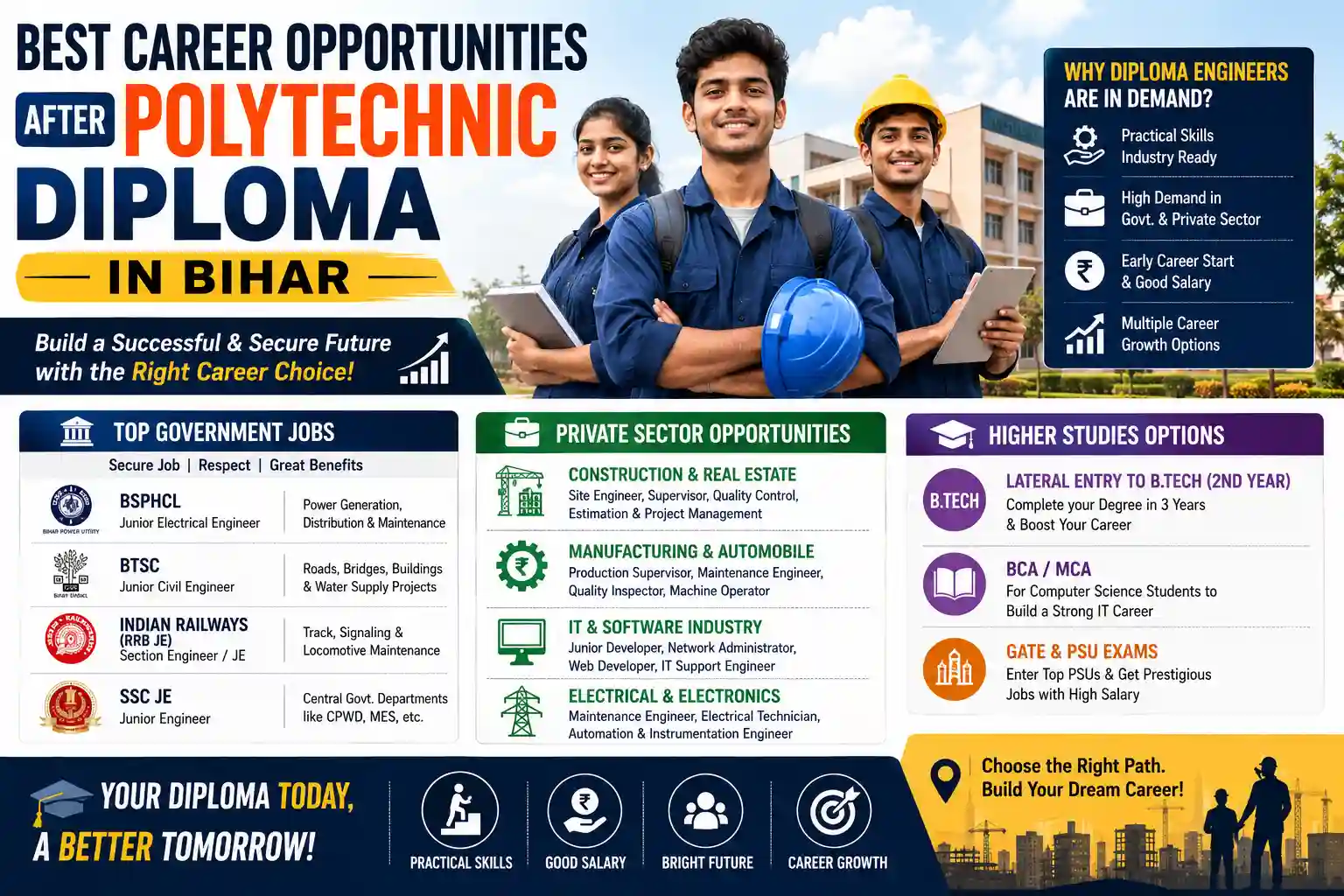
Best Career Opportunities After Polytechnic Diploma in Bihar
02 September 2026
What Is Polytechnic Diploma? Complete Guide After 10th
19 August 2026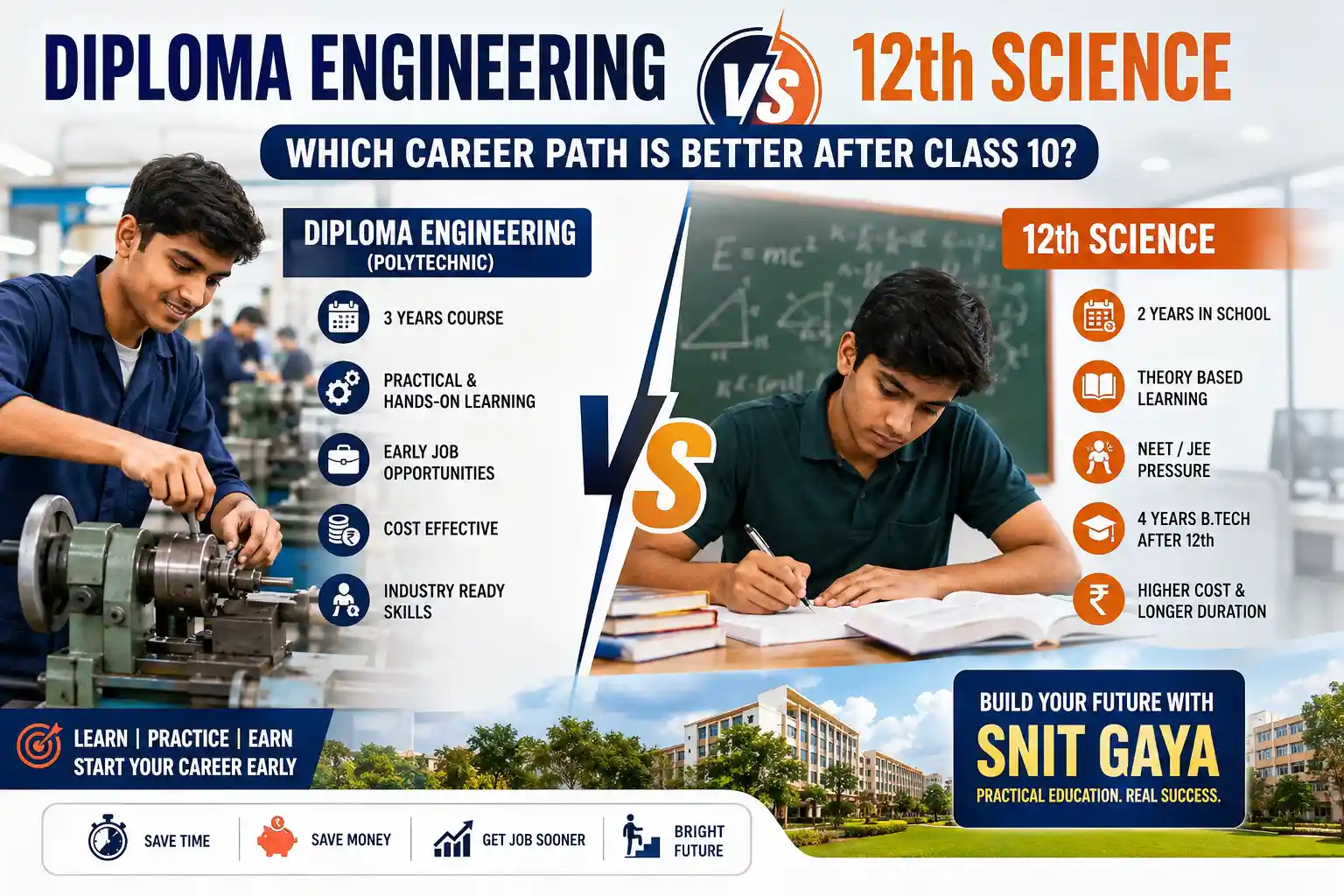
Diploma Engineering vs 12th Science After 10th
18 August 2026