
What Is Polytechnic Diploma? Complete Guide for Parents & Students
19 august 2026
Choosing the right course after Class 10 can be one of the most important decisions for a student’s academic and career journey. Many students who are interested in engineering, technology, machines, computers, construction, or other technical fields start looking for career-oriented courses that can help them develop practical skills at an early stage.
One such option is a Polytechnic Diploma.
But what exactly is a polytechnic diploma? Is it the same as an engineering degree? Which courses are available? Can students pursue a diploma after Class 10? What are the career opportunities after completing it? And can a student pursue B.Tech after a diploma?
This guide answers these questions in simple language so that both students and parents can understand the polytechnic diploma course, its benefits, eligibility, branches, career opportunities, and future study options.
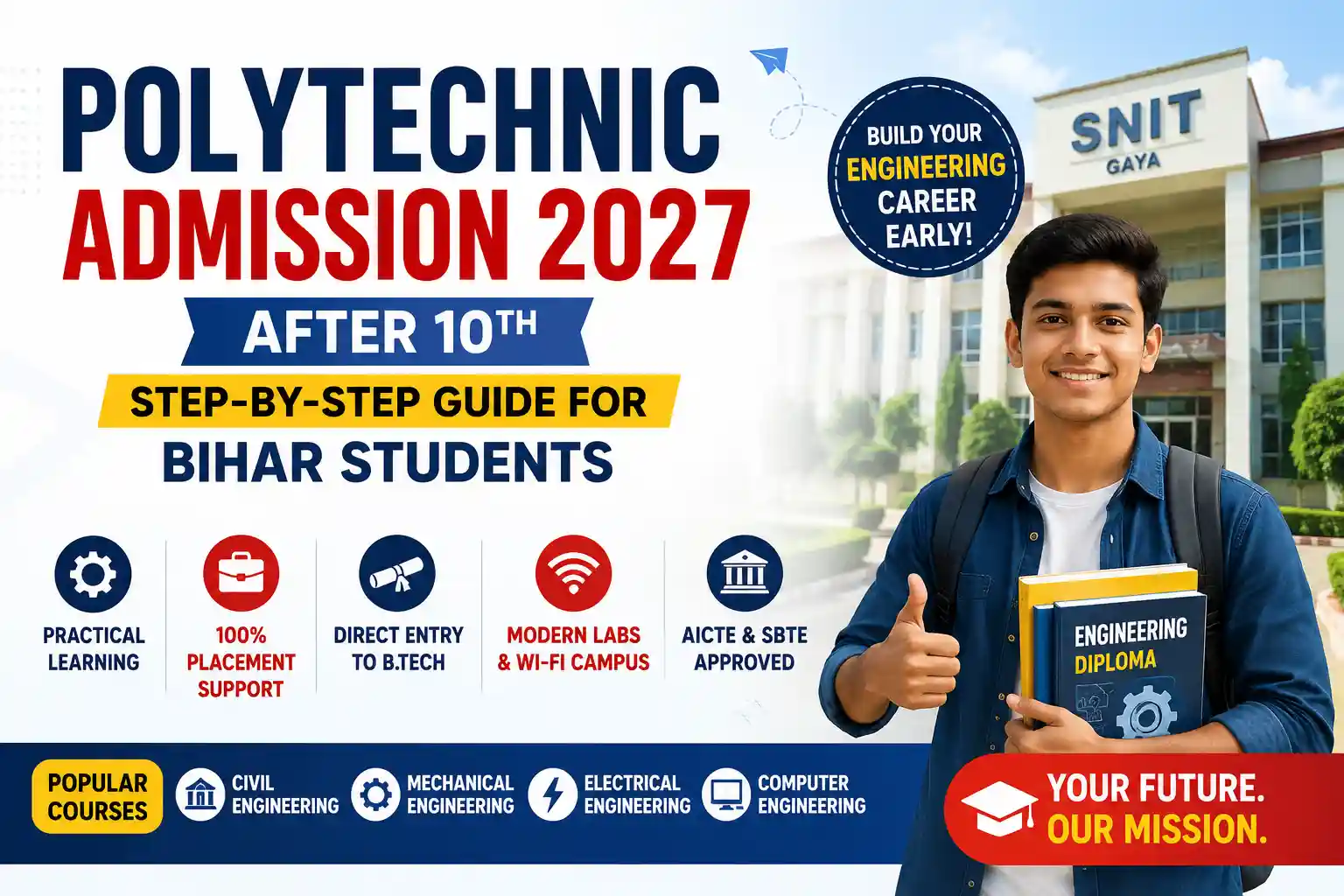
For students looking for technical education in Bihar, institutions such as SNIT Gaya can be considered while comparing diploma engineering and technical education options.
What Is Polytechnic Diploma?
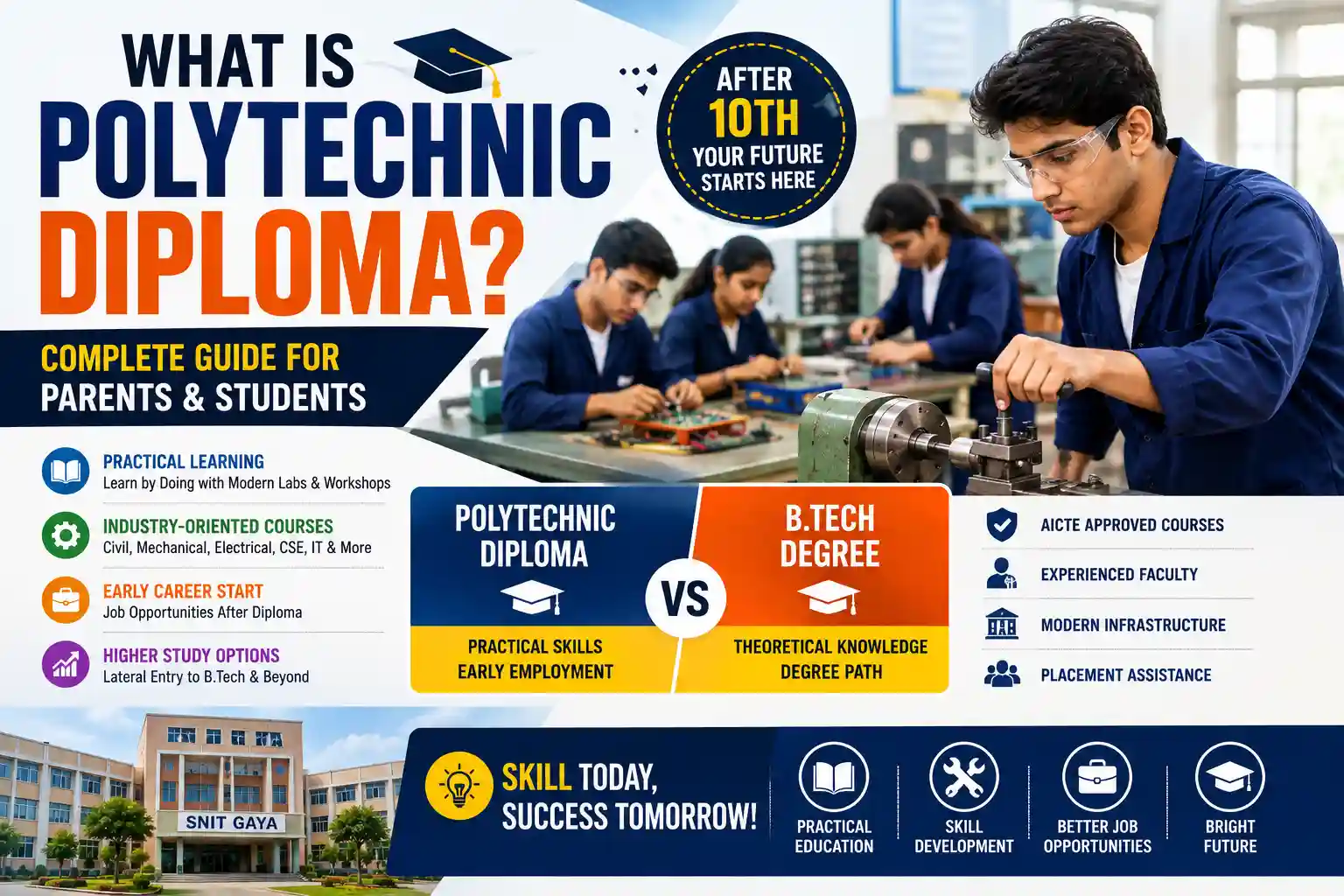
A polytechnic diploma is a technical education program designed to provide students with practical and industry-oriented knowledge in engineering and technology-related fields.
In simple words, a polytechnic diploma allows students to learn the fundamentals of a particular technical field through a combination of classroom education, laboratory work, practical training, workshops, and project-based learning.
The diploma course meaning is different from a conventional undergraduate degree. A diploma generally focuses more strongly on practical and technical skills and can be an attractive option for students who want to enter the technical workforce earlier.
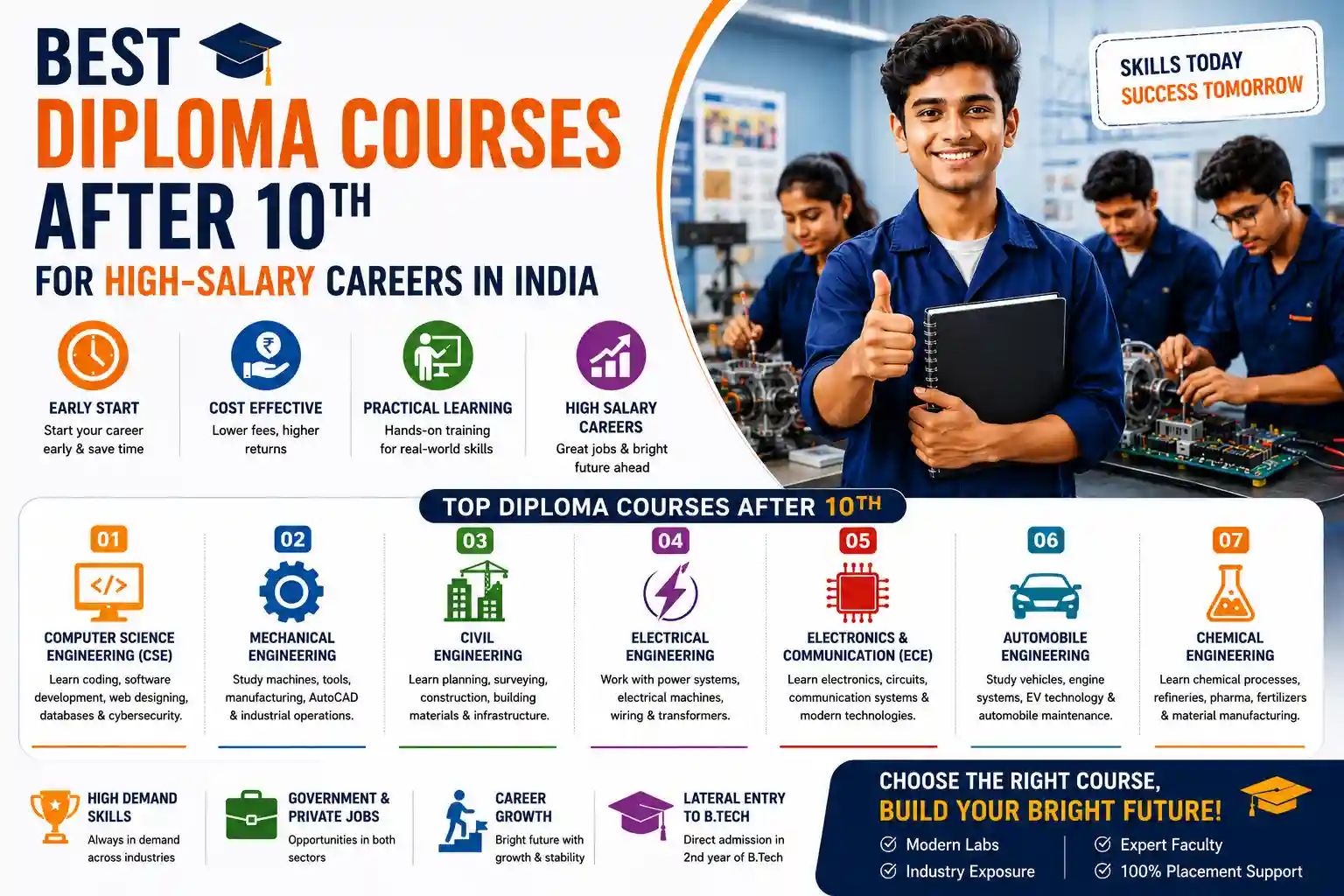
Students can commonly pursue diploma programs in areas such as:
-
Civil Engineering
-
Mechanical Engineering
-
Electrical Engineering
-
Computer Science and Engineering
-
Electronics Engineering
-
Automobile Engineering
-
Information Technology
-
Other technical and engineering disciplines
The exact branches offered depend on the institution and the applicable educational and regulatory framework.
Polytechnic Diploma After 10th: Why Do Students Choose It?
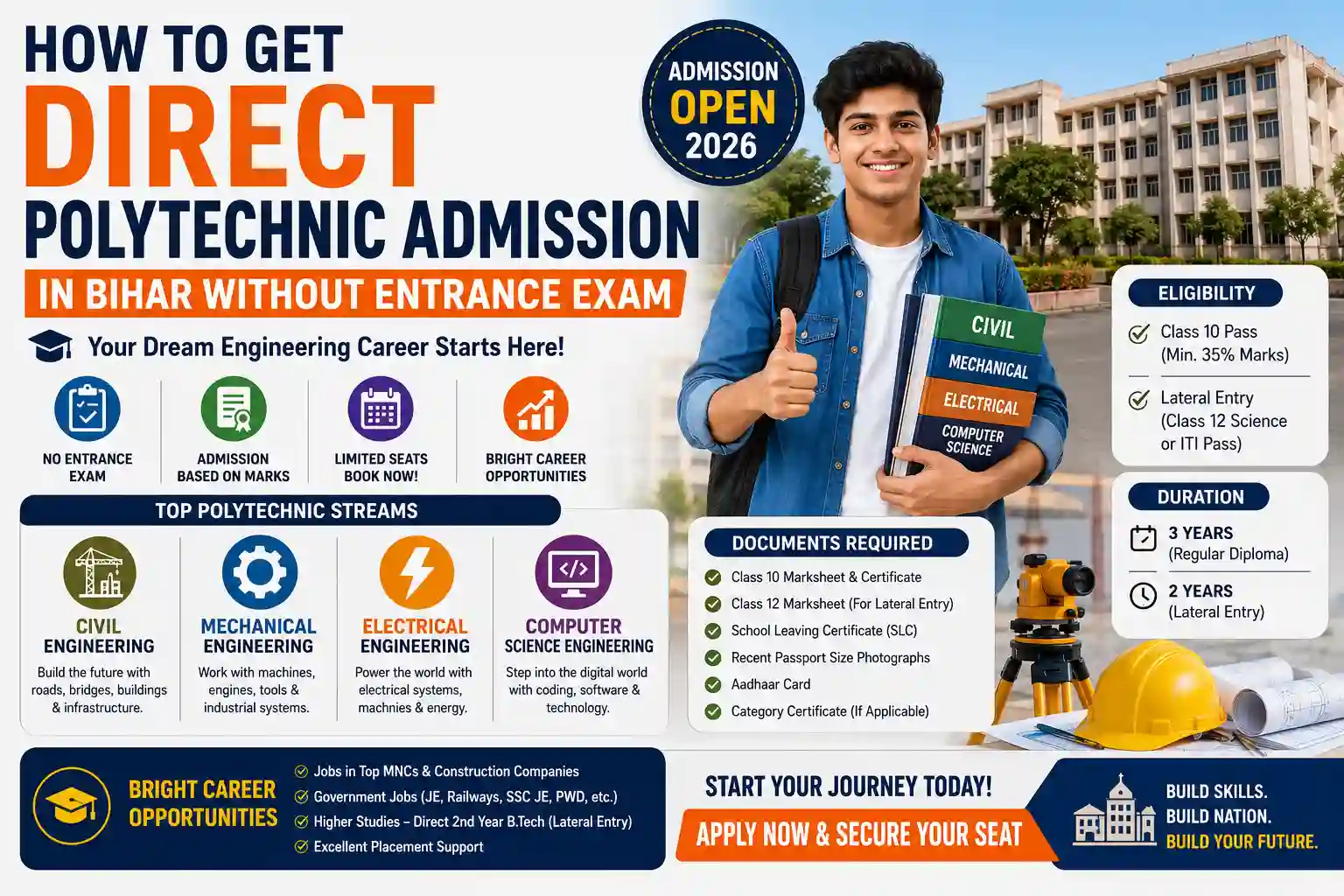
One of the biggest advantages of a polytechnic diploma is that students can enter technical education after completing Class 10, subject to the eligibility requirements of the specific course and institution.
Instead of completing Class 11 and 12 and then pursuing a four-year engineering degree, students can choose a diploma-level technical program and begin learning engineering concepts earlier.
For example, a student interested in construction may choose Civil Engineering, while a student interested in machines may consider Mechanical Engineering. Similarly, students interested in computers may explore Computer Science or Information Technology-related diploma programs.
This makes polytechnic education particularly relevant for students who:
-
Prefer practical learning
-
Are interested in engineering and technology
-
Want technical skills after Class 10
-
Want to understand a specific engineering field early
-
Prefer skill-oriented education
-
Want to explore employment opportunities after diploma
-
May want to continue towards higher technical education later
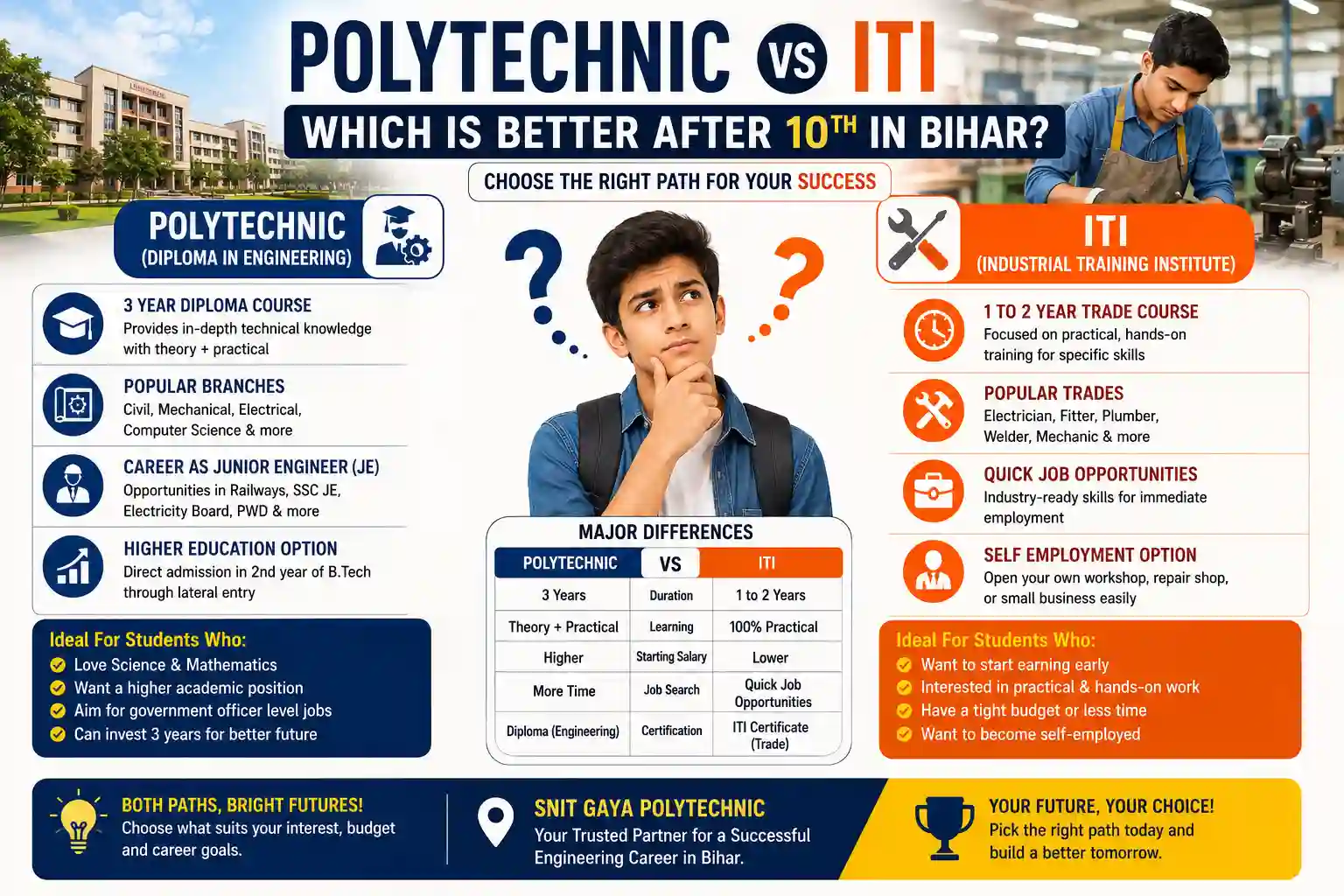
What Is the Difference Between Polytechnic Diploma and B.Tech?
Parents and students often confuse a diploma in engineering with a B.Tech degree. They are related to technical education, but they are not the same qualification.
| Polytechnic Diploma | B.Tech |
|---|---|
| Usually pursued after Class 10 or through applicable entry routes | Generally pursued after Class 12 or through diploma-to-degree pathways |
| Usually shorter in duration than a B.Tech | Generally a four-year undergraduate engineering program |
| Strong focus on practical and technical skills | Combines theoretical, practical, analytical and engineering education |
| Suitable for early technical specialization | Undergraduate engineering degree |
| Can lead to technical employment | Opens opportunities associated with an engineering degree |
| Diploma holders may have options for higher studies | Graduates can pursue postgraduate and professional opportunities |
The right choice depends on a student's academic goals, interests, financial considerations, preferred learning style, and long-term career plan.
How Long Is a Polytechnic Diploma Course?
The duration of a polytechnic diploma depends on the program and entry route.
For students entering after Class 10, many engineering diploma programs are structured as multi-year technical programs. Students should always check the current duration and curriculum of the particular course and institution before taking admission.
The academic structure generally includes a combination of:
-
Engineering fundamentals
-
Technical subjects
-
Mathematics and science
-
Practical laboratory sessions
-
Workshops
-
Computer-based learning
-
Industrial exposure
-
Projects
-
Skill development
The objective is to help students develop both theoretical understanding and practical knowledge.
What Do Students Study in a Polytechnic Diploma?
The subjects depend on the selected branch.
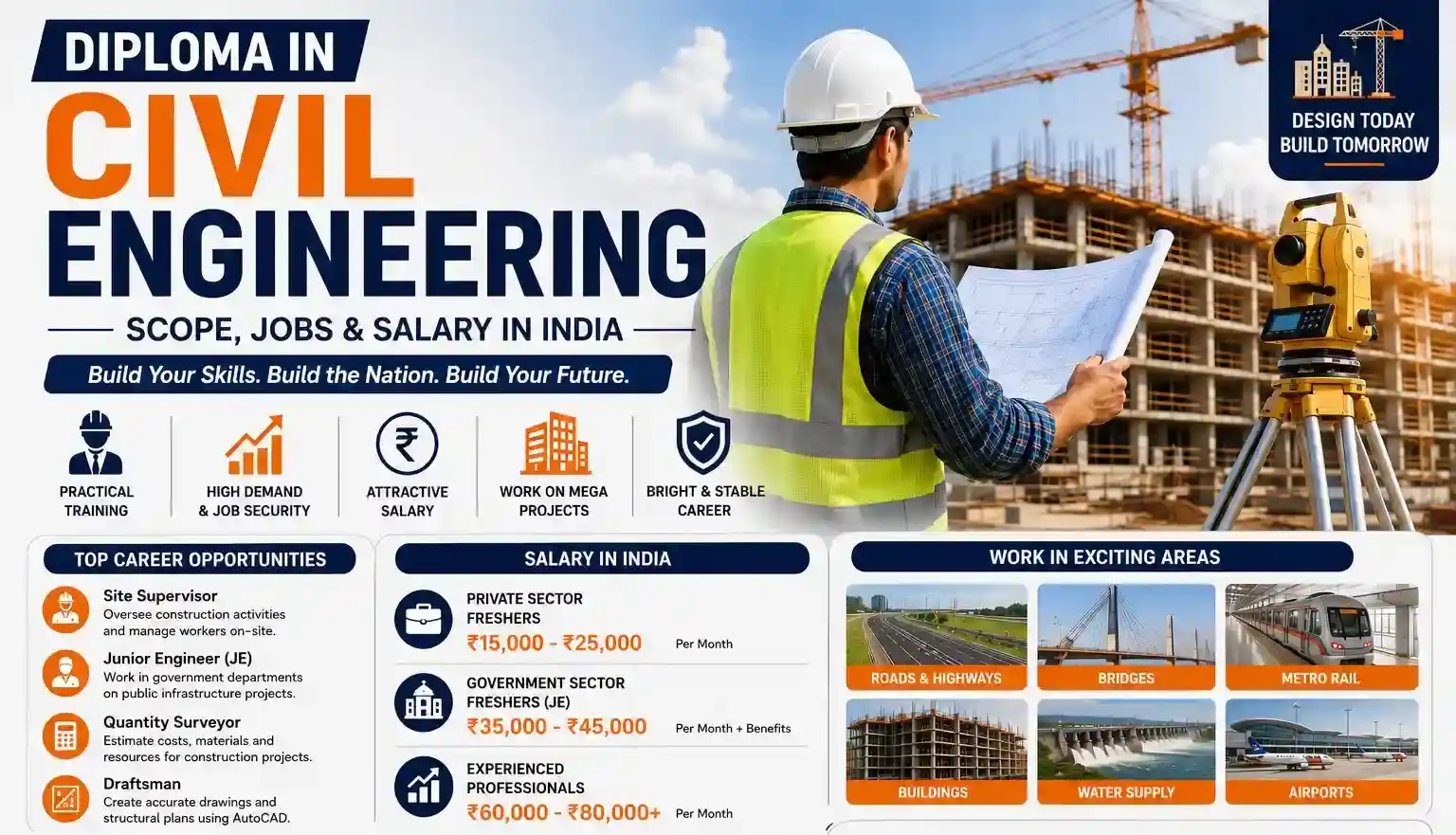
Civil Engineering Diploma
Students interested in construction and infrastructure can explore Civil Engineering.
Typical areas may include:
-
Engineering drawing
-
Building materials
-
Surveying
-
Construction technology
-
Structural concepts
-
Soil mechanics
-
Transportation engineering
-
Environmental engineering
-
Estimation and costing
-
Construction management
Students can eventually explore careers related to construction companies, infrastructure projects, surveying, site supervision, and related technical roles.
Mechanical Engineering Diploma
Mechanical Engineering is suitable for students interested in machines, manufacturing, production, and mechanical systems.
Students may study areas such as:
-
Engineering mechanics
-
Thermodynamics
-
Manufacturing processes
-
Machine design
-
Engineering drawing
-
Automobile fundamentals
-
Production technology
-
Workshop technology
-
Industrial engineering
Electrical Engineering Diploma
Students interested in electricity and electrical systems may choose Electrical Engineering.
Common areas include:
-
Electrical circuits
-
Electrical machines
-
Power systems
-
Electrical measurements
-
Control systems
-
Electrical installation
-
Power electronics
-
Basic electronics
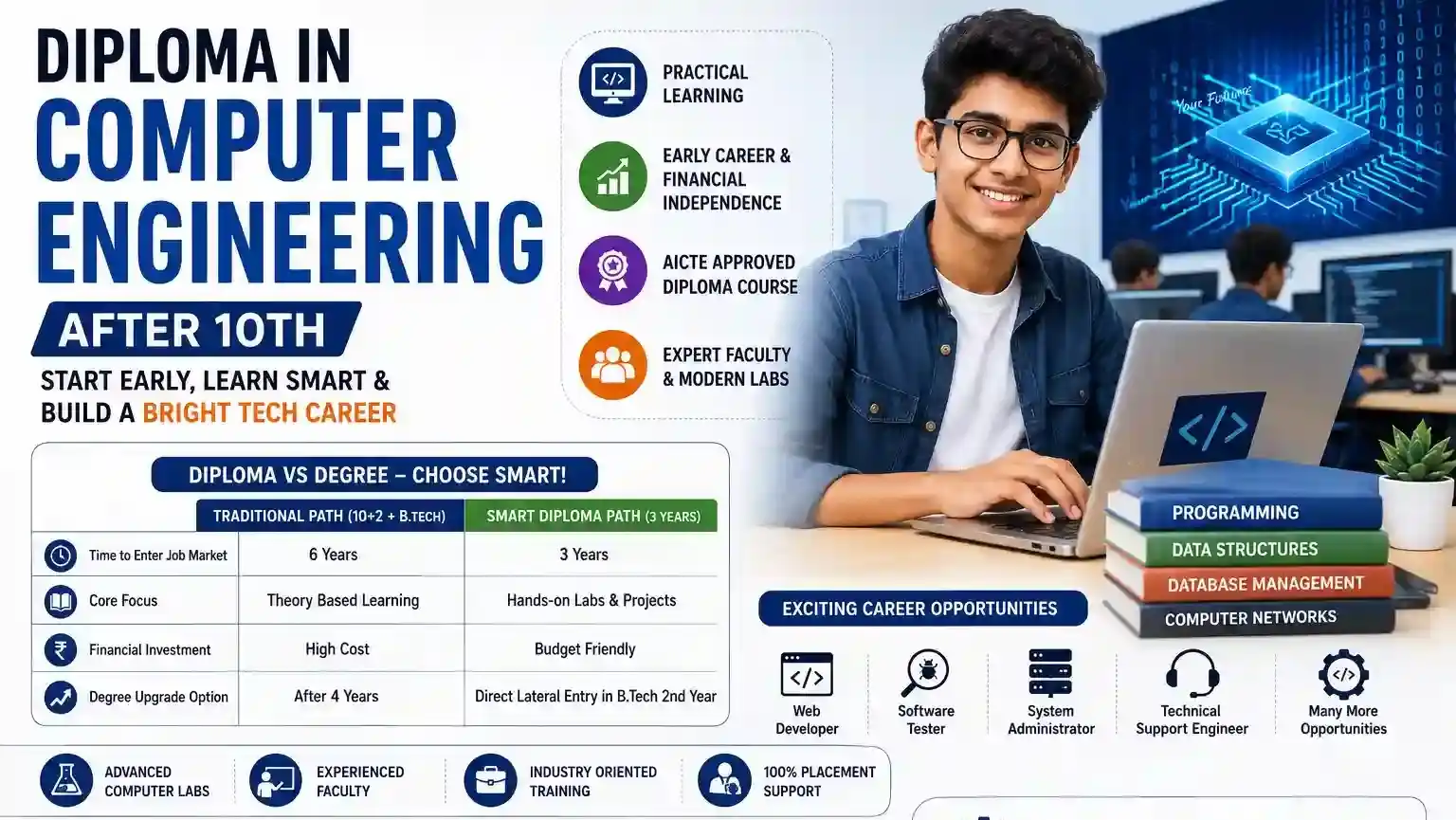
Computer Science Engineering Diploma
For students interested in computers and software, Computer Science-related diploma programs can be an option.
Students may learn about:
-
Programming
-
Data structures
-
Database management
-
Computer networks
-
Operating systems
-
Web technologies
-
Software development
-
Computer fundamentals
-
Information technology
Students should compare the syllabus, laboratories, faculty, facilities, and practical exposure offered by different institutions before selecting a course.
Eligibility for Polytechnic Diploma After 10th
Eligibility requirements can vary depending on the state, admission authority, course, and institution.
Generally, students applying for diploma engineering after Class 10 are expected to have completed the required level of secondary education and meet the prescribed subject and minimum-mark requirements.
Some institutions or admission processes may also have specific requirements regarding:
-
Minimum educational qualification
-
Mathematics and science subjects
-
Minimum percentage
-
Age criteria
-
Domicile requirements
-
Entrance examination
-
Counselling
-
Category-specific eligibility
Therefore, students should always verify the latest admission notification before applying.
How to Take Admission in a Polytechnic Diploma Course?
The admission process depends on the state and institution.
A typical process may include the following steps:
Step 1: Complete Class 10
Students should complete their Class 10 education from a recognized board and check whether they satisfy the requirements for the desired diploma course.
Step 2: Choose the Engineering Branch
Students should identify the field that matches their interests and career goals.
For example:
-
Interested in buildings and construction → Civil Engineering
-
Interested in machines → Mechanical Engineering
-
Interested in electricity → Electrical Engineering
-
Interested in computers → Computer Science/IT
Step 3: Research Colleges
Compare institutions based on:
-
Accreditation and approvals
-
Course availability
-
Faculty
-
Laboratories
-
Workshops
-
Infrastructure
-
Placement support
-
Industry exposure
-
Location
-
Fees
-
Student reviews and reputation
Step 4: Check Admission Route
Depending on the institution and state, admission may be based on merit, an entrance examination, counselling, or another approved admission mechanism.
Step 5: Submit Application
Complete the application form and submit the required academic and identity documents within the specified deadline.
Step 6: Counselling or Seat Allocation
Where applicable, eligible students participate in counselling and select their preferred branch and institution based on the available options.
Step 7: Complete Admission Formalities
After receiving a seat, students generally need to complete document verification and fee-payment formalities.
Is Polytechnic Diploma Good for Students?
There is no single answer that applies to every student.
A polytechnic diploma can be a good option for students who are genuinely interested in technical education and prefer practical, skill-based learning.
It can be particularly useful for students who already have an idea about the engineering field they want to explore.
However, students should not choose a diploma simply because someone else recommends it. They should consider their:
-
Interests
-
Academic performance
-
Career goals
-
Preferred subjects
-
Learning style
-
Financial situation
-
Long-term education plans
Parents should also encourage students to understand the course before making a decision.
Benefits of Polytechnic Diploma
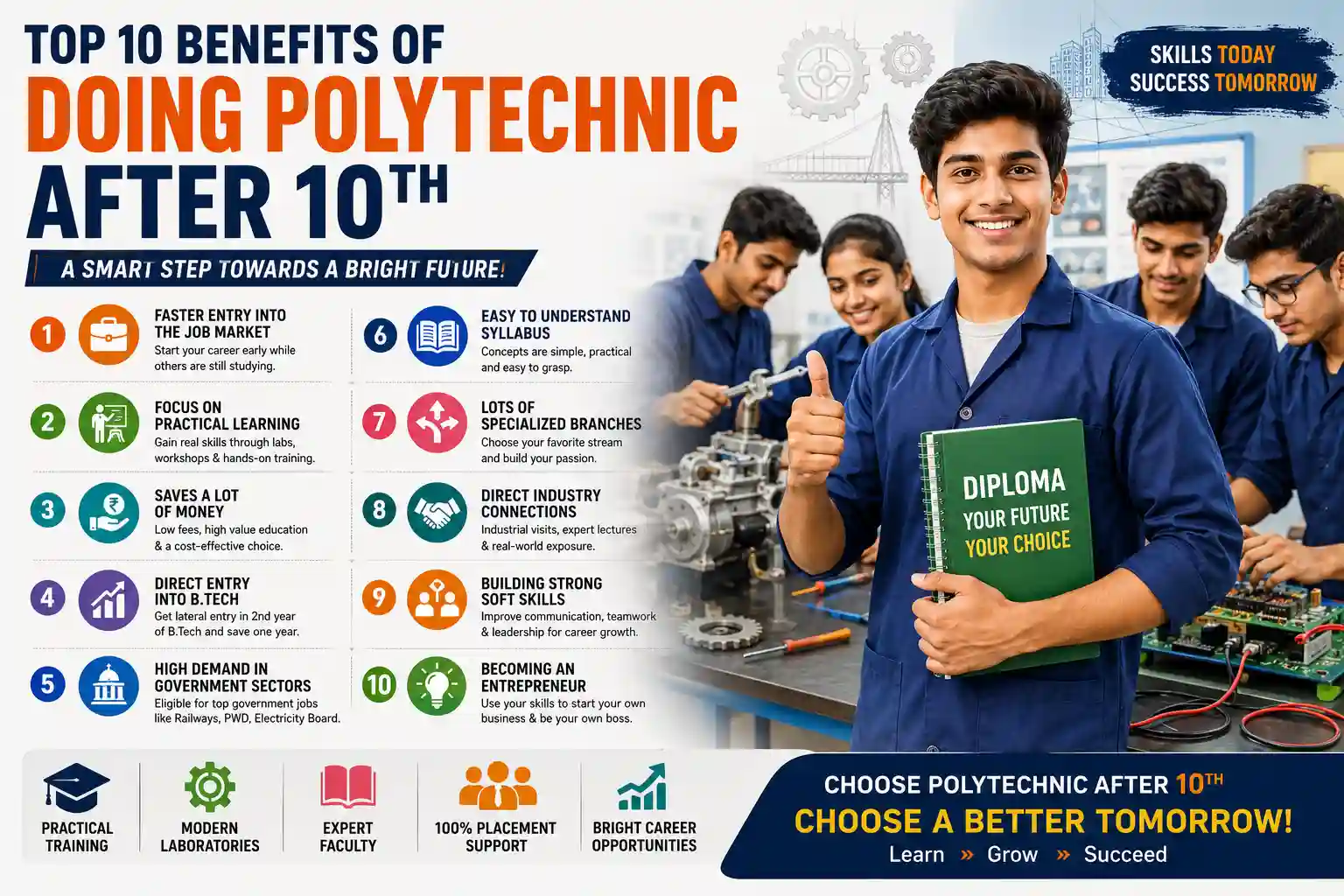
There are several reasons why students consider diploma engineering programs.
1. Early Technical Education
Students can begin learning engineering concepts at an earlier stage instead of waiting until after Class 12.
2. Practical Learning
Polytechnic programs generally emphasize practical classes, laboratory work, workshops, and technical applications.
3. Skill Development
Students can develop technical skills relevant to their chosen engineering discipline.
4. Career Opportunities
After completing a diploma, students may be eligible for various technical and junior-level roles depending on their qualification, skills, recruitment requirements, and industry.
5. Higher Education Options
A diploma does not necessarily have to be the end of a student's education. Eligible diploma holders may have pathways to continue their technical education, including applicable lateral-entry routes into degree programs.
Students must check the rules applicable to their state, university, and admission authority.
Career Options After Polytechnic Diploma
A diploma can provide students with technical knowledge that may be relevant to several industries.
Career opportunities depend on the student's branch, skills, experience, academic performance, recruitment requirements, and location.
Possible roles can include:
-
Junior Engineer
-
Diploma Engineer
-
Site Supervisor
-
Technician
-
CAD Operator
-
Production Technician
-
Maintenance Technician
-
Electrical Technician
-
Computer Support Technician
-
Quality Control Technician
-
Surveying Assistant
-
Technical Assistant
The exact job title and eligibility requirements vary between employers.
Students should also remember that simply holding a diploma does not guarantee employment. Practical skills, communication, computer knowledge, internships, certifications, and industry exposure can significantly strengthen career prospects.
Can Polytechnic Students Do B.Tech?
Yes, eligible diploma holders may have opportunities to pursue a B.Tech through applicable lateral-entry admission routes.
In a lateral-entry pathway, eligible diploma holders may enter an advanced year of an undergraduate engineering program instead of starting from the first year, subject to the rules of the concerned university, state, and admission authority.
For example, a student who completes a Diploma in Civil Engineering may explore eligible B.Tech pathways in Civil Engineering.
This provides students with an important long-term option:
Class 10 → Polytechnic Diploma → B.Tech → Higher Education/Career
The exact admission criteria, branch mapping, entrance requirements, and available seats should always be checked for the relevant academic year.
Polytechnic Diploma vs Class 11–12: Which Is Better?
This is one of the most important questions parents ask.
The answer depends on the student's future plans.
Choose Polytechnic If:
-
The student is interested in technical education.
-
The student prefers practical learning.
-
The student already has an interest in a particular engineering field.
-
The student wants to develop technical skills after Class 10.
-
The student is comfortable with mathematics and technical subjects.
-
The student is considering a diploma-to-degree pathway.
Choose Class 11–12 If:
-
The student wants to keep multiple academic options open.
-
The student is preparing for competitive examinations requiring Class 12 eligibility.
-
The student is not yet sure about a specific technical field.
-
The student plans to pursue a conventional undergraduate degree after Class 12.
Neither route is automatically better. The best route depends on the student's individual goals.
How Parents Can Help Students Choose the Right Polytechnic Course
Parents play an important role in helping students make educational decisions.
Instead of focusing only on college reputation or future salary, parents should discuss the student's interests and strengths.
Ask questions such as:
-
Which subjects does the student enjoy?
-
Does the student prefer practical work?
-
Is the student interested in machines, computers, construction, electricity, or another technical field?
-
Does the student want to start technical education after Class 10?
-
Does the student plan to pursue B.Tech later?
-
What are the student's long-term career goals?
Parents should also compare multiple institutions rather than selecting a college only because it is close to home.
How to Choose a Polytechnic College
Choosing the right institution is as important as choosing the right branch.
Before admission, students and parents should evaluate:
Academic Quality
Check the qualifications and experience of faculty members and the overall academic environment.
Laboratories and Workshops
Technical education requires practical exposure. Students should check whether the institution provides appropriate laboratories, workshops, equipment, and practical learning opportunities.
Course and Curriculum
Compare the curriculum with the student's career interests.
Placement Support
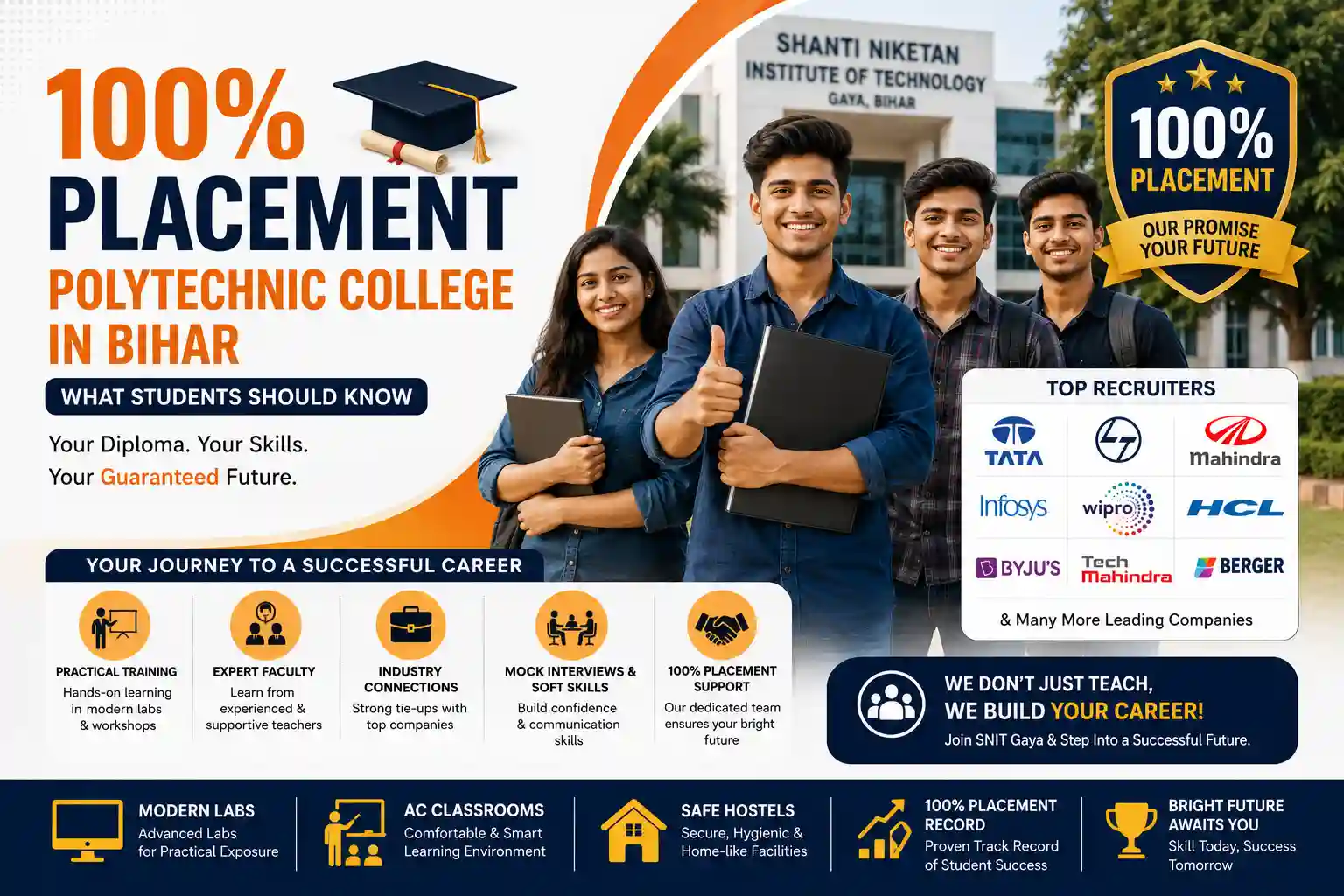
Review the institution's placement support, industry connections, internship opportunities, and available career guidance.
Infrastructure
Consider classrooms, laboratories, libraries, computer facilities, workshops, campus facilities, and other resources.
Location
The college's location, transportation, accommodation availability, and overall accessibility may also influence the decision.
Fees
Compare tuition fees and other expenses with the facilities and educational opportunities provided.
Learn Diploma Engineering at SNIT Gaya
For students searching for technical education opportunities in Bihar, SNIT Gaya can be included in the list of institutions to research when exploring diploma engineering options.
Students and parents should review the courses available, eligibility requirements, admission process, facilities, faculty, practical exposure, placement support, and current fee structure before making an admission decision.
The right institution should provide students with an environment where they can build technical knowledge, practical skills, confidence, and professional readiness.
If you are exploring diploma engineering at SNIT Gaya, make sure to understand the available branches and admission requirements for the relevant academic session before applying.
Is Polytechnic Diploma a Good Career Choice in 2026?
Technical skills continue to be relevant across sectors such as construction, manufacturing, infrastructure, electrical systems, automobiles, information technology, electronics, and other industries.
However, students should think beyond simply obtaining a diploma.
The strongest approach is to combine the qualification with:
-
Practical skills
-
Internship experience
-
Computer skills
-
Communication skills
-
Industry certifications
-
Project experience
-
Problem-solving ability
-
Continuous learning
Technology and industry requirements continue to change, so students who keep improving their skills can be better prepared for future opportunities.
Frequently Asked Questions
Final Thoughts
A polytechnic diploma can be an excellent option for students who want to begin technical education after Class 10. It provides an opportunity to learn engineering concepts, develop practical skills, and understand a specific technical discipline at an early stage.
However, choosing a diploma course should be a well-informed decision. Students and parents should compare the branch, college, eligibility, fees, practical facilities, career opportunities, and higher-education options before taking admission.
For students exploring technical education in Bihar, researching institutions such as SNIT Gaya can be an important part of the college-selection process. If your goal is to learn diploma engineering at SNIT Gaya, compare the available programs and current admission requirements carefully and choose the branch that aligns with your interests and future career plans.
The right diploma course is not simply about getting a qualification—it is about building a strong technical foundation for the next stage of your education and career.

How Polytechnic Students Can Prepare for Government Jobs
10 September 2026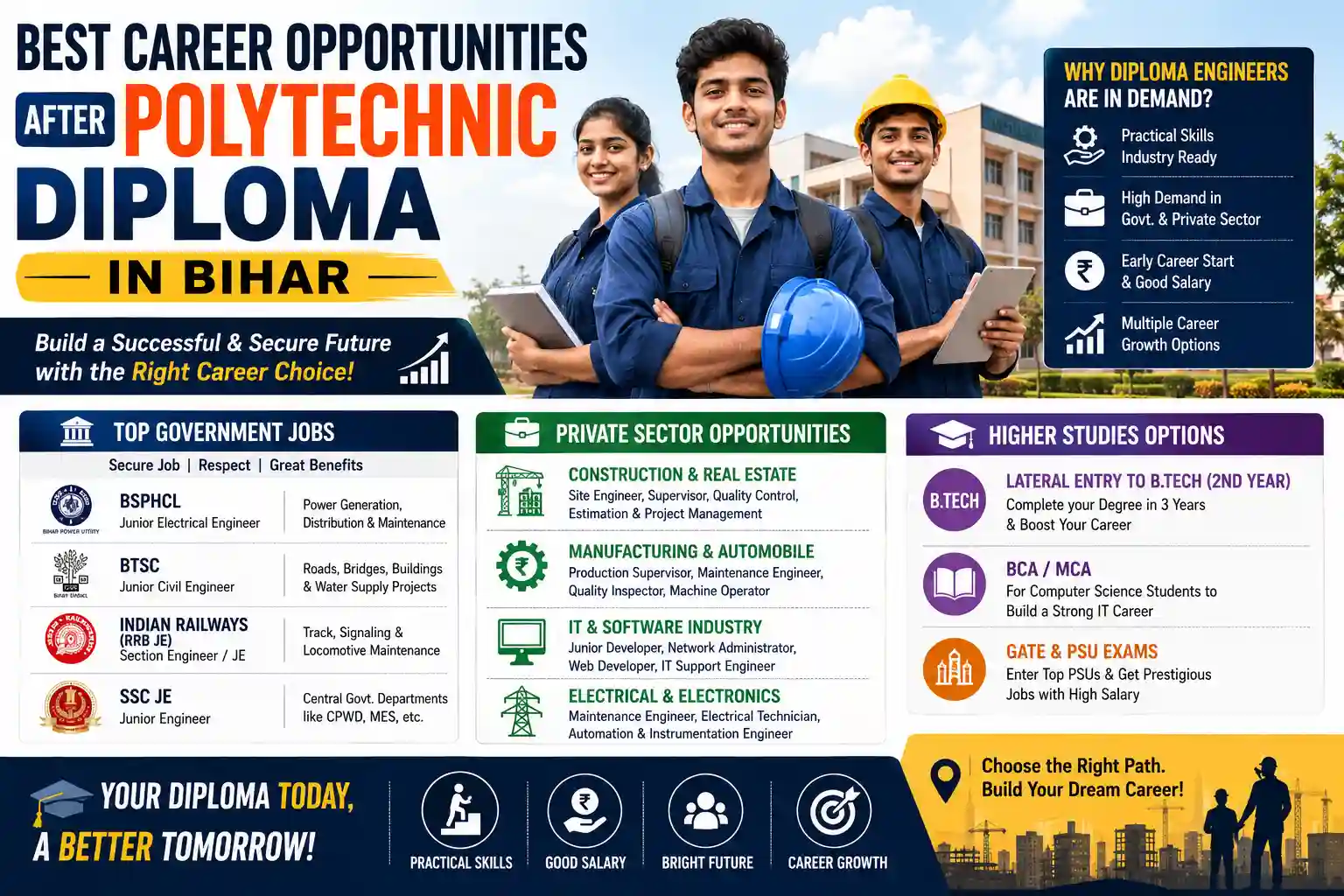
Best Career Opportunities After Polytechnic Diploma in Bihar
02 September 2026
What Is Polytechnic Diploma? Complete Guide After 10th
19 August 2026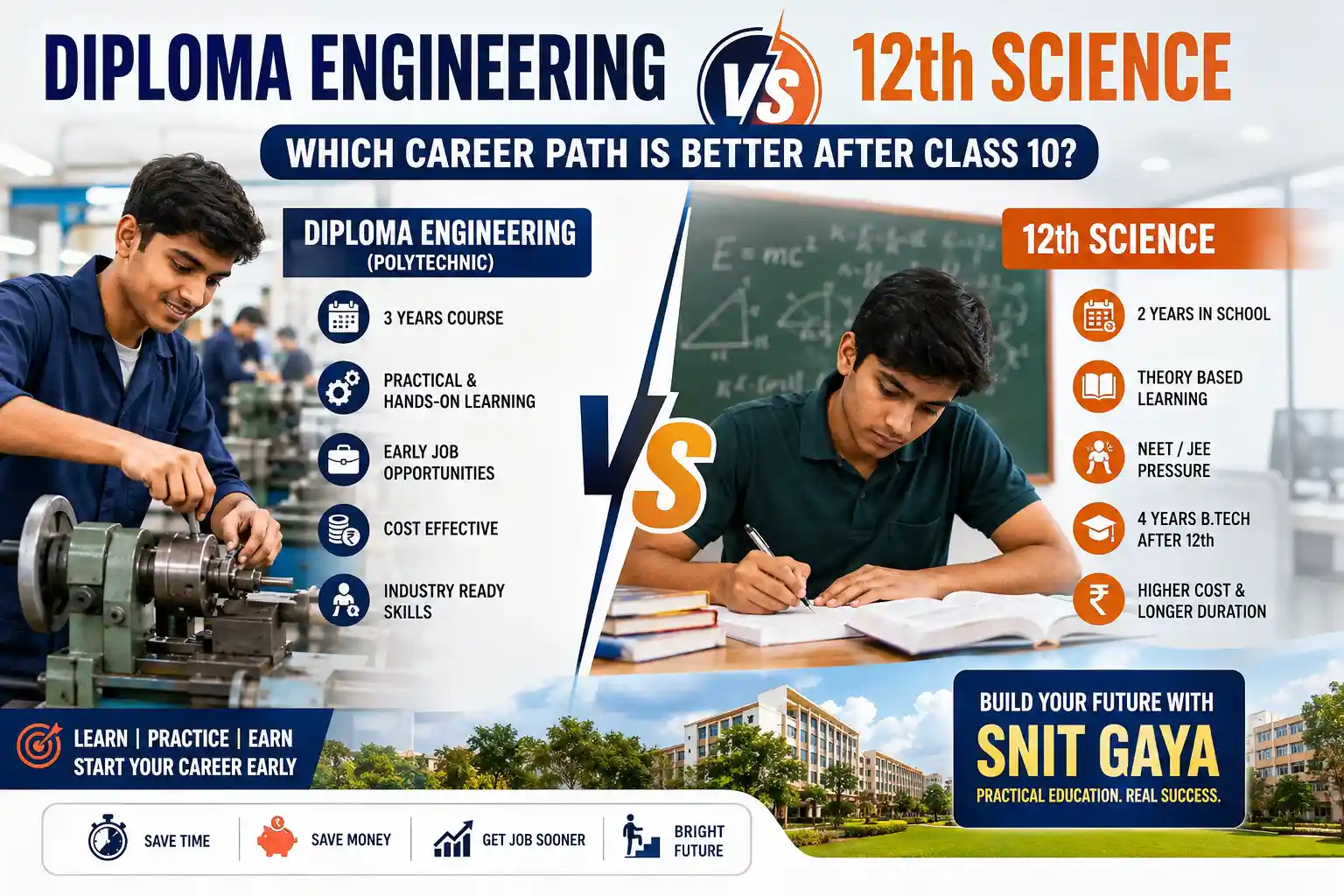
Diploma Engineering vs 12th Science After 10th
18 August 2026